Do I Have to Count Calories to Lose Fat? (5 No-App Options for People Who Hate Tracking)
Calorie apps are great right up until you try to log “one bite” of your kid’s mac and cheese at 9 p.m. and the app asks which brand. So, do I have to count calories to lose fat? No. What matters is using a little more energy than you take in, most days, for months. Counting is one way to see that gap, not the only one. This isn’t medical advice, just what the studies show and a few no-app options that hold up.
First visit? Start here walks through the calorie gap, and Best fat-loss tools lists the few gadgets worth owning.
Disclosure: As an Amazon Associate I earn from qualifying purchases. Some links are affiliate links. You pay the same. This site is not medical advice.
In a hurry? Build most meals on the plate method, use your hand to size portions, and check your weekly average weight plus your waist once a week. If that trend sits flat for about a month, count for two weeks to find the leak, then stop.
You need a calorie gap, not a calorie app
The best-known test of this is the Stanford DIETFITS trial (Gardner et al., JAMA 2018). It put 609 adults on a healthy low-fat or healthy low-carb plan for 12 months. Per the full paper, nobody got a calorie target. Both groups were told to max out vegetables, cut added sugar and refined flour, and cook whole foods at home when possible.
Even so, both groups reported eating roughly 500 to 600 fewer calories a day than at the start, and both lost weight on average. The two diets came out about even. One fair caveat: they also went to 22 dietitian-led group classes over the year. “No counting” didn’t mean “no help.” The help just came from food rules, not a spreadsheet.
Counting comes with a time bill (somebody has to type in the casserole)
To be fair to the apps, tracking has a decent record. A 2011 systematic review (Burke et al.) of 22 studies kept finding a link between self-monitoring and weight loss, though the authors rated that evidence weak.
Then there’s the clock. In a 24-week online program (Harvey et al., Obesity 2019), 142 people spent an average of 23.2 minutes a day logging food in month one and 14.6 minutes a day by month six. Our math, not the study’s: 23.2 minutes times 30 days is about 11.6 hours in the first month. That’s a lot of barcode scanning. Upside: the people who did best opened their food journal more often each day, not for longer.
And counting isn’t automatically accurate. In a small 1992 study in the New England Journal of Medicine (Lichtman et al.), 10 people who said diets didn’t work for them underreported what they ate by 47% on average, and their metabolisms were normal. Guessing portions is just hard. Even the free NIH Body Weight Planner notes that people often underestimate how much they eat.
Five ways to run the gap without a calorie app
Pick one or two to start.
| Option | What you actually do | Daily effort | Best for | Weak spot |
|---|---|---|---|---|
| Plate method | Half vegetables, a quarter protein, a quarter starch on a 9-inch plate | Low | Home dinners, family meals | Sauces, oils, and seconds don’t show up on the plate |
| Hand portions | Palm of meat, fist of rice, cupped hand of nuts, thumb tip of oil | Low | Restaurants, work lunches, travel | Hands vary; it’s an estimate |
| Photo log | Snap everything you eat, look back once a day | Low to medium | People who hate typing | No numbers, and easy to forget snacks |
| Food rules | A few set rules, like vegetables at lunch and dinner and no sweet drinks | Low | People who like simple defaults | Big portions of “good” food still count |
| Weekly check-in | Weekly average weight plus a waist measurement | Low (a quick weigh-in most mornings) | Everyone, as the feedback loop | Slow signal; water hides changes for a week or two |
1. The plate method
The CDC’s plate method starts with a 9-inch dinner plate, about the length of a business envelope. Fill half with nonstarchy vegetables like salad, green beans, or broccoli. Fill a quarter with lean protein such as chicken, beans, tofu, or eggs. The last quarter goes to carb foods like rice, pasta, potatoes, or fruit. The CDC wrote it for diabetes meal planning, but the portion logic works for anyone, and it never asks you to scan a barcode.
The 2025-2030 Dietary Guidelines fit the same pattern: protein at every meal, and they call their new pyramid a flexible framework, not a strict diet. If your plates are huge, see whether smaller plates help you eat less.
2. Hand portions
Same CDC page, handy guide. A palm without the fingers is about 3 ounces of meat, fish, or poultry. A fist is about 1 cup or one medium piece of fruit. A cupped hand is 1 to 2 ounces of nuts or pretzels. Thumb tip to first joint is about a tablespoon, handy for oil and peanut butter. Your hand comes to every restaurant, so this one travels best.
3. A photo log
Snap everything before you eat it, and scroll back at night. Your camera roll already holds 400 shots of the dog, so a few of lunch won’t hurt. A small 6-month trial (Dunn et al., 2019, 41 adults) compared a photo app with a calorie-counting app. Weight change ended up about the same in both groups. The honest part: both groups tracked on fewer than 30% of days. A photo log only works if you actually look at it.
4. A few food rules
This is the DIETFITS approach in miniature. Pick two or three rules you can keep on a bad day: a vegetable at lunch and dinner, protein at every meal, no sweet drinks, dessert on weekends. Fewer decisions means fewer 9 p.m. negotiations with the pantry. If you’re hungry all the time, our always hungry on a diet post shows how to get more food for fewer calories.
5. The weekly check-in (the part you shouldn’t skip)
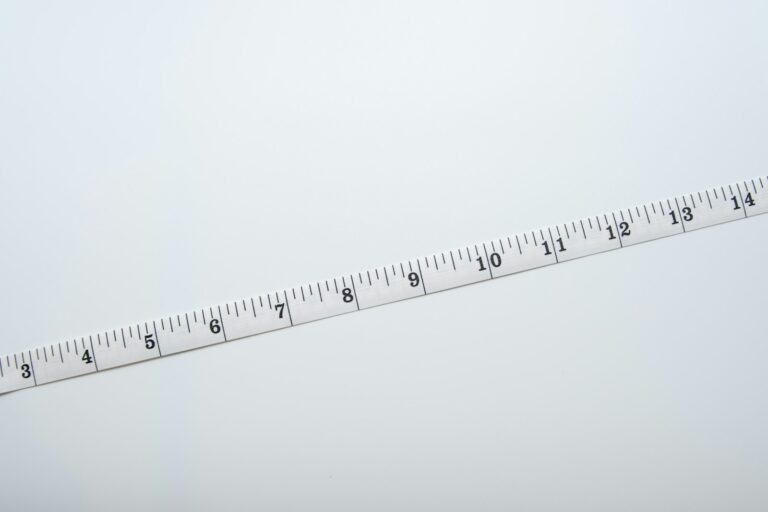
You still need proof the gap is real. A 2015 review of 17 studies (Zheng et al., Obesity) found regular self-weighing went with more weight loss, and it wasn’t linked to depression or anxiety in those studies. Weigh most mornings, average the week, and tape your waist weekly. Our bathroom scale vs body tape guide walks through the routine. If stepping on a scale or measuring yourself stirs up anxiety or old eating-disorder habits, skip it and talk to a clinician.
When counting earns its keep (a short stint, not a life sentence)
Counting makes a good diagnostic even if you never plan to live in an app. The CDC’s Steps for Losing Weight page suggests writing down everything you eat and drink for a few days to see where small changes fit. A snapshot, not forever. Count for a short run when:
- Your weekly average and waist have been flat for about four weeks. A two-week log usually finds the leak. Our plateau stall audit lays out the order to check things in.
- You eat a lot of calorie-dense food. Oil, nut butter, cheese, granola, and nuts are where eyeballing goes wrong fastest.
- A clinician or dietitian gave you a calorie target. Follow their plan. This post doesn’t replace it.
Log right after meals, keep it rough, and stop after two weeks unless you like it.
A no-count week that fits a busy schedule
- Sunday: Measure your waist and pick your two food rules. Write both down.
- Every morning: Weigh after the bathroom, before breakfast.
- Dinners at home: Plate method, and serve from the stove so the pot stays in the kitchen.
- Lunches out: Palm of protein, fist of starch, and ask for sauce on the side.
- Thanksgiving leftovers: Turkey is the protein quarter. Pie can borrow the starch quarter.
- Next Sunday: Average your weights, measure again, and compare. Four weeks tells you far more than one.
On pace, the CDC notes that a gradual 1 to 2 pounds a week tends to stay off better than faster loss. That’s context, not a promise.
Two tools that help without an app
You don’t need either to start. Both buttons below are Amazon paid links, so I may earn a commission, and you pay the same.
Budget pick for the weekly check-in: Etekcity digital bathroom scale (EB9380H). A plain scale with no app or account. It reads in 0.1 lb steps up to 400 lb, and the batteries come in the box. Buy it if: you just want a morning number for your weekly average. Skip it if: your current scale gives steady readings. Honest catch: the maker says to use it on hard, flat floors like tile or wood, so carpet means moving it or using a board.
Budget pick for a two-week calibration: Escali Primo digital food scale. For a short counting stint, or for checking your hand guesses against real grams. Capacity is 11 lb (5,000 g), it reads in 1 g steps, there’s a tare button so the bowl doesn’t count, and it shuts off after four idle minutes. Buy it if: you’re curious what your “thumb of peanut butter” really weighs. Skip it if: weighing food makes meals stressful for you. Honest catch: buyers are split on durability, with some saying it quit after about 14 months. On the fence? Our food scale explainer covers who can skip one.
Quick FAQ
Do I have to count calories to lose fat?
No. You need a steady calorie gap. Counting is one way to check it. Portion habits plus a weekly weight and waist check are another.
How long before I know if no-counting is working?
Give it about four weeks of weekly averages and waist numbers. Water can hide real change for a week or two, so a single weigh-in doesn’t tell you much.
Bottom line: counting calories is a tool, not a requirement. If you hate it, run the gap with the plate, your hand, a couple of food rules, and a weekly check-in, and save counting for a two-week tune-up when the trend stalls. More gear ideas live in Best fat-loss tools, and the bigger picture is on Start here.