Does When You Eat Matter for Fat Loss? (Or Only How Much?)
The fridge at 10pm has a way of making meal timing feel like the whole game. Skip breakfast, slam an early window, stretch dinner until the last leftover is gone — and still wonder why the weekly math barely budges. So does when you eat matter for fat loss, or is it mostly how much? Here’s the honest answer from a big timing trial, a U.S. evidence review on evening snacks, and a busy-adult plan that does not need a perfect clock. This is not medical advice.
Short version: how much you eat (the calorie gap) is the main lever. Timing can help you stick with the plan, especially if late-night grazing is your weak spot, and an earlier eating window showed a few extra metabolic edges in one large trial. Matched calories still dominate. For kitchen habits that make the “how much” side easier, see our Kitchen for fat loss hub, or begin at Start here.
Disclosure: As an Amazon Associate I earn from qualifying purchases. Some links are affiliate links. You pay the same. This site is not medical advice.
Quick picks for this plan: the Escali Primo digital food scale (budget) for the “how much” side, and the Sharp digital alarm clock (budget) as a kitchen-closed / end-of-window reminder — a habit tool, not a fat burner. Details below.
What the big TRE timing trial found
Researchers in Spain (with NIA and NIDDK collaborators) ran a 12-week randomized trial in 197 adults with overweight or obesity. Everyone got usual care based on Mediterranean diet education. Three groups also used an 8-hour time-restricted eating (TRE) window: early day, late day, or a window they chose. A fourth group got usual care alone with no TRE. The main outcome was visceral fat (deep belly fat) measured by MRI. Source: Dote-Montero et al., Nature Medicine 2025 (doi 10.1038/s41591-024-03375-y).
Primary result: adding TRE did not beat Mediterranean usual care alone for visceral fat. The mean differences versus usual care were about -4%, -6%, and -3% for early, late, and self-selected TRE (none statistically significant). Adherence was high at 85% to 88% across TRE groups. No serious adverse events; five people reported mild ones.
Body weight was a different story. Per the National Institute on Aging summary, the three TRE groups lost more weight than the control group — averages of 5.3 lb (early/morning), 6.4 lb (late/afternoon), and 6.8 lb (self-selected). Timing of the window did not change the visceral-fat result. The morning/early group did show a greater drop in subcutaneous fat (the fat under the skin) and lower fasting glucose versus usual care, per that same NIA write-up.
Plain-English takeaway: in this trial, squeezing meals into eight hours helped people lose more scale weight than diet education alone, but the clock position of that window was not the magic switch for deep visceral fat. An earlier window looked a bit better on some secondary markers. Calories and overall diet still did the heavy lifting.
| Group (12 weeks) | What they did | What stood out |
|---|---|---|
| Usual care (n=49) | Mediterranean diet education; no TRE | Reference for visceral fat; less weight loss than TRE groups (NIA) |
| Early TRE (n=49) | 8-hour morning window + usual care | ~5.3 lb average weight loss (NIA); greater subcutaneous fat drop + lower fasting glucose vs usual care (NIA); VAT not better than usual care |
| Late TRE (n=52) | 8-hour later window + usual care | ~6.4 lb average weight loss (NIA); VAT not better than usual care |
| Self-selected TRE (n=47) | Their own 8-hour window + usual care | ~6.8 lb average weight loss (NIA); VAT not better than usual care |
NIA also notes the cohort was European, so U.S. food patterns and risk groups may differ. Treat it as strong evidence, not a universal rule for every kitchen.
Why “when” still feels huge to busy adults
Because evenings are where the plan often leaks. Desk day, late commute, dinner, then the open kitchen while a show is on. You can eat “clean” all day and still stack a second dinner of chips, cereal, or whatever is left in the fridge.
That gut feeling has some backing, with careful wording. The 2025 Dietary Guidelines Advisory Committee’s systematic review (NESR) concluded that overall snacking in adults may not link clearly to body composition outcomes. However, after-dinner / evening snacking in adults may be associated with less favorable body composition and obesity risk. That conclusion is graded limited. Source: NESR / 2025 DGAC frequency of meals and snacking review.
Limited means “signal worth noticing,” not “proof that 9pm snacks always ruin fat loss.” It also matches what many busy adults already know: late grazing is easy to underestimate. Our close-the-kitchen night snacking post is the habit version of that idea. Breakfast timing is a different question — see do I need to eat breakfast — and liquid calories can quietly fill any window; our drink calories post ranks the usual suspects.
Honest aside: the office donut box at 3pm and the fridge light at 10pm are both “when” problems that are really “how much” problems wearing a clock costume.
The eating window that somehow includes every leftover
Intermittent fasting ads love a clean sunrise-to-afternoon chart. Real life is messier. Your “8-hour window” can quietly become brunch, a late lunch meeting, dinner with friends, and then “just finishing the pasta” because throwing food away feels worse than a flexible rule.
If a window helps you stop grazing, use it. If the window is just a story you tell while still matching your old calorie intake, the scale will notice. TRE is a structure tool. It is not a free pass past energy balance. The CDC still frames durable fat loss around a steady pace of about 1 to 2 pounds a week — the same boring lever whether your plate is at noon or 7pm.
Protein at meals helps the “how much” side feel less like constant hunger. Our guide to protein per meal keeps that practical. A short walk after meals is another easy add; see the Walking for fat loss hub.
Busy-adult decision table: pick a structure, then protect it
You do not need the perfect chronotype protocol. You need a default you can run on a weeknight. Use this as a menu, not a personality test.
| Structure | Best when… | Watch-outs | Busy-adult add-ons |
|---|---|---|---|
| Early 8-hour window | You like a solid breakfast/lunch and can finish dinner early | Social dinners and late shifts fight this; hunger at night if dinner is tiny | Protein at each meal; set a kitchen-closed alarm; optional early TRE interest from the NIA secondary findings |
| Late 8-hour window | Mornings are chaos and dinner is your main sit-down meal | Easy to stack snacks after dinner inside a “late” window | Still close the kitchen after the last planned meal; watch drink calories |
| No formal window | Windows feel brittle or your schedule flips weekly | All-day grazing with no stop rule | Protein + planned meals; hard kitchen-closed time; weigh calorie-dense pours |
All three rows still need the same foundation: a modest calorie gap, protein you can actually hit, and movement most days. Timing is the wrapper. The filling is still how much.
Two tools that make “how much” and “kitchen closed” easier
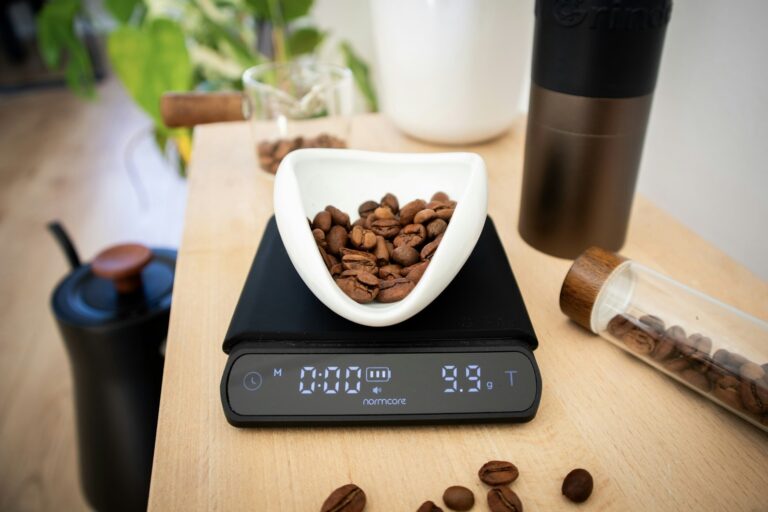
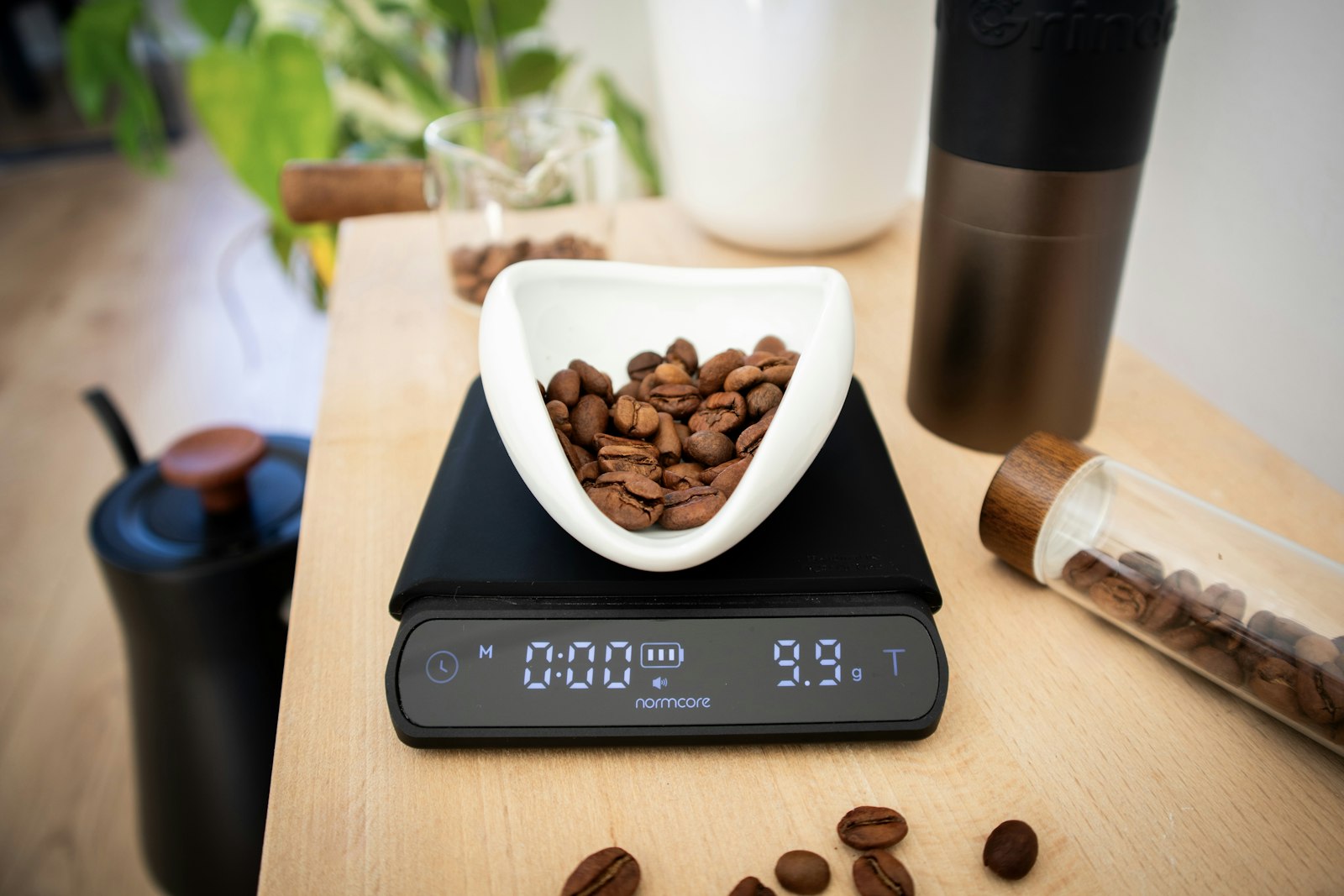
Budget pick: Escali Primo digital food scale. A simple two-button kitchen scale. Capacity 11 lb (5,000 g), readings in 0.05 oz (1 g) steps, tare to zero a bowl, sealed control panel, about 8.5 x 6 x 1.5 inches, automatic shut-off after about four minutes of inactivity. Runs on two AA batteries (included on the listing we checked). Frame it as the “how much” tool for oils, peanut butter, cheese, and cereal — the pours that quietly erase a timing win. For: anyone who wants honest portions without an app. Skip it if: you already measure those foods another way and never free-pour. Honest catch: it’s basic — no app, no nutrition database — so you still look foods up yourself. More on when a scale is worth it: do you need a food scale.
Budget pick: Sharp digital alarm clock (dual weekday/weekend). Large red LED, ascending alarm, easy-set controls, dual alarms for weekday vs weekend routines, plug-in power with 2x AA battery backup (batteries sold separately). Use it as a kitchen-closed or end-of-eating-window reminder — same idea as putting a hard stop on the evening graze. For: people who need a non-phone cue that dinner (or the window) is done. Skip it if: your phone alarm already works and does not pull you into scrolling. Honest catches: it is not a smart clock, the AA backup is sold separately, and an alarm is a routine tool, not a metabolism upgrade.
Quick FAQ
Is intermittent fasting better than just eating less?
In the Nature Medicine trial above, TRE plus Mediterranean education beat education alone on body weight, but not on the primary visceral-fat outcome. If fasting helps you eat less without feeling trapped, it’s a useful structure. If it just compresses the same calories into fewer hours, expect similar results to a regular calorie gap. How much still leads.
Should I force an early eating window?
Only if it fits your life. Early TRE had some secondary advantages (subcutaneous fat and fasting glucose vs usual care) in the NIA summary of that trial. Late and self-selected windows still lost more weight than control. A window you abandon by Thursday is worse than a later window you keep. Pick adherence first.
What if my job means late dinners?
Skip the sunrise fantasy. Use a late window or no window, keep protein at the meals you do eat, and put a hard stop after the last planned plate so “late dinner” does not turn into “late dinner plus two snacks.” Weekend blowouts are a separate leak — see weekend eating undoing the weekday deficit.
Bottom line: when you eat can shape habits and late-night snacking, and early windows may carry small extra edges for some markers, but how much you eat remains the main fat-loss lever. Use a window only if it helps you stick the plan. Close the kitchen, hit protein, walk most days, and aim for that steady CDC pace of about 1 to 2 pounds a week. For gear and kitchen defaults, see Kitchen for fat loss, Best fat-loss tools, and Start here.