Can You Spot Reduce Belly Fat With Crunches? (What the Studies Show)
Late-night TV has sold more ab gadgets than most closets can hold. So can you spot reduce belly fat with crunches, or is the 3-minutes-a-day promise just good lighting? Here’s what the studies found, what ab work is actually good for, and a simple weekly plan that goes after belly fat the way it really leaves. This is not medical advice.
Short version: no. In the studies, training one body part did not burn the fat sitting on top of it. Fat loss happens across your whole body, and you don’t get to pick the order. Crunches still build a stronger core. They just can’t aim fat loss at your belly. For the tools that help with the parts that do work, see our Best fat-loss tools hub.
Disclosure: As an Amazon Associate I earn from qualifying purchases. Some links are affiliate links. You pay the same. This site is not medical advice.
Quick picks for this plan: the Amazon Basics 1/2-inch extra thick exercise mat (budget) for floor work at home, and the RENPHO smart body measuring tape (mid-range) if you want waist numbers logged for you. Details below.
What the ab studies actually found
The cleanest test of the crunch question came from Southern Illinois University Edwardsville. Researchers split 24 healthy, inactive adults aged 18 to 40 into two groups. One group did 7 ab exercises, 2 sets of 10 reps each, 5 days a week for 6 weeks. The other group did nothing new. Both kept eating the same amount. Source: Vispute et al., J Strength Cond Res 2011.
That’s 140 reps a session, 700 a week, and about 4,200 reps over the study (our math). The result? No real change in body weight, body fat percentage, belly fat measured by scan, waist size, or belly skinfolds. What did change: the ab group could do more curl-ups at the end, 47 versus 32 for the control group. So the muscles got better. The fat on top stayed put.
Is 6 weeks too short? Fair question. So look at a bigger dose. In a 2013 study from Chile, 11 young adults trained only one leg for 12 weeks, 3 times a week. Each session was a single set of 960 to 1,200 light leg presses. That’s 36 sessions and roughly 35,000 to 43,000 reps on one leg (our math). Source: Ramirez-Campillo et al., J Strength Cond Res 2013.
Total body fat did drop, from 13.5 kg to 12.8 kg on average (5.1%). But the fat didn’t come off the trained leg. It came off the arms (down 10.2%) and the trunk (down 6.9%). The leg doing all the work saw no real fat change. The authors’ own words: the program reduced fat mass, “but this reduction was not achieved in the trained body segment.”
The 13-study verdict
One or two small studies can be flukes, so researchers pooled them. A review led by the same Chilean researcher (published online in late 2021) combined 13 controlled studies with 1,158 people aged 14 to 71. Each one compared a trained limb with an untrained one. Out of 37 comparisons, 17 leaned toward the trained side losing more fat and 20 leaned the other way. Pooled together, the effect was basically zero. Their conclusion: “there was no spot reduction.” Source: Ramirez-Campillo et al., Human Movement 2022.
To be fair, not every study agrees. A 2023 Norwegian trial of 16 men with overweight added crunches and torso rotations to treadmill running for 10 weeks. That group lost about 700 g (about 1.5 lb, our math) more trunk fat than a running-only group. But total fat loss was similar in both groups, it was one small study, and it only included men. Source: Brobakken et al., Physiol Rep 2023. Interesting, worth watching, not a reason to plan your week around crunches.
| Study | Who and what | What happened to local fat |
|---|---|---|
| Vispute 2011 | 24 adults; 7 ab exercises, 5 days a week, 6 weeks | No real change in belly fat or waist size; ab endurance went up |
| Ramirez-Campillo 2013 | 11 young adults; one leg trained, 12 weeks | Total fat down 5.1%, but from arms and trunk, not the trained leg |
| Ramirez-Campillo 2022 review | 13 studies, 1,158 people, trained vs untrained limb | No spot reduction overall |
| Brobakken 2023 | 16 men; ab work plus running vs running only, 10 weeks | About 700 g more trunk fat lost; total fat loss similar |
The 1,000-crunch challenge (your neck has notes)
Every few months a challenge goes around: 1,000 crunches a day, 30 days, flat stomach. The leg study above did more than 1,000 reps a session for 12 weeks, and the fat still didn’t come off the working muscle. Doing more reps of a small move mostly gets you more practice at that move. It’s also a lot of your limited free time spent on one muscle group.
Crunches are not useless. They’re just doing a different job than the one on the box.
So what are ab workouts good for?
Plenty. Stronger core muscles help you carry groceries, lift a kid, and hold good form on other lifts. The CDC says adults need muscle-strengthening activity at least 2 days a week that works all major muscle groups, and it lists the abdomen right alongside legs, hips, back, chest, shoulders, and arms. So keep some core work. Just put it inside a full-body session instead of making it the whole plan.
Full-body strength work also helps you hang on to muscle while you lose fat. Our guide to resistance bands at home covers a no-gym setup, and cardio or weights first helps if you only have 30 minutes.
What actually shrinks belly fat
Boring answer, real answer: a steady calorie deficit, regular movement, and patience. When your whole body loses fat, your belly is part of that. You just can’t choose which spot goes first. The CDC notes that people who lose weight at a steady pace, about 1 to 2 pounds a week, are more likely to keep it off.
For movement, the CDC’s baseline is at least 150 minutes a week of moderate activity, like brisk walking, which could be 30 minutes a day, 5 days a week. You can break it into smaller chunks. Walking is the easiest place to start, and our Walking for fat loss hub and how many steps a day post show how to fit it into a desk job.
Honest aside: the office donut box on Friday does more to the weekly math than any Monday ab circuit. That’s not a reason to skip the donut forever. It’s a reason to spend your energy on food and walking first, and crunches second.
| Piece of the plan | Weekly target | Busy-adult version |
|---|---|---|
| Walking or other moderate cardio | 150 minutes (CDC) | Three 10-minute walks a day, 5 days a week (our math: 150 minutes) |
| Full-body strength | 2 or more days, all major muscle groups (CDC) | Two 20-minute band or dumbbell sessions; finish with 5 minutes of core |
| Food | A steady calorie deficit | Protein at each meal, plan the treats, watch the drinks |
| Tracking | One waist measurement a week | Same day, same time, same spot; compare month to month |
Measure your waist, not your reps
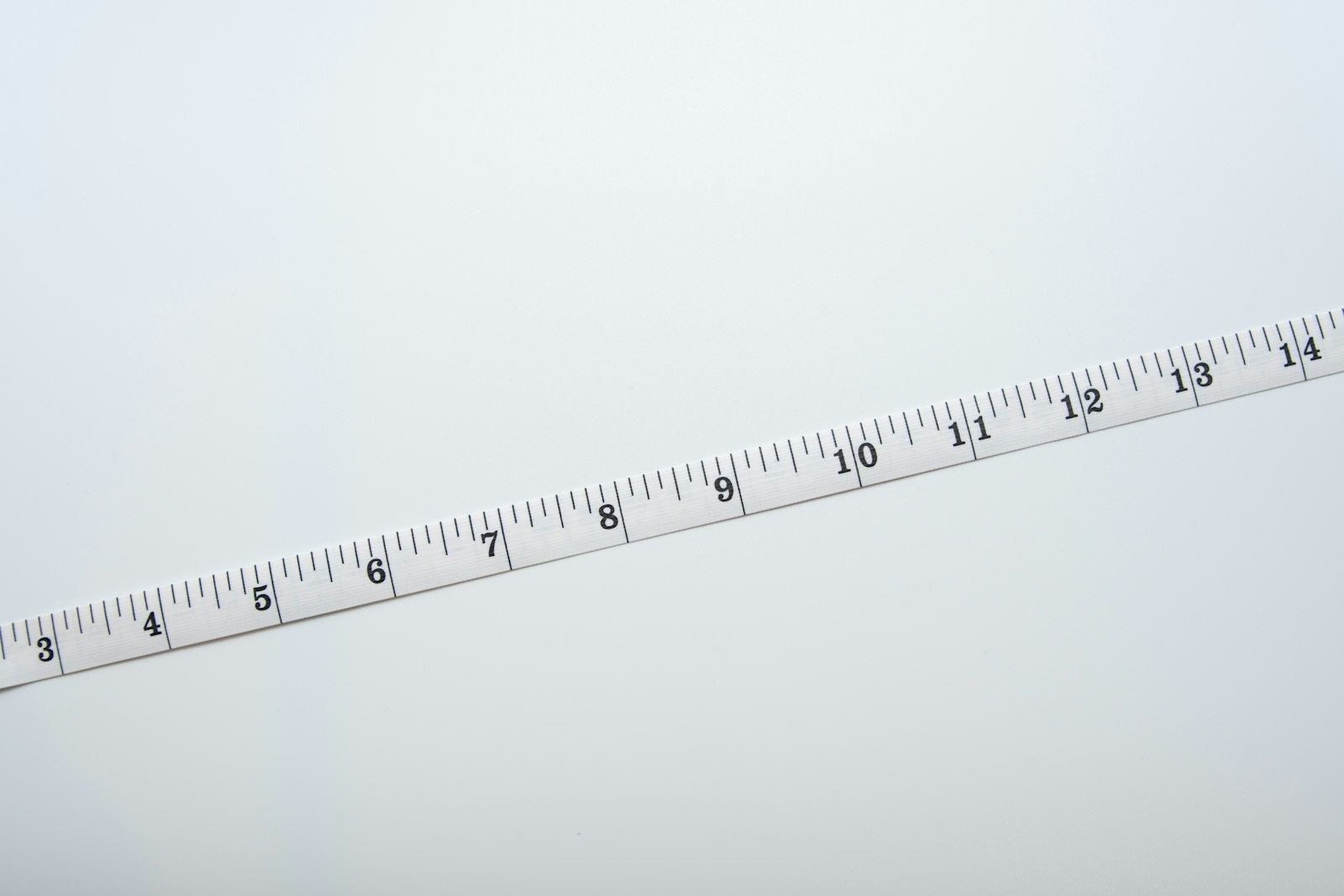
If belly fat is what you care about, track it directly. The scale bounces with water and food. A tape around your waist tells you more about the middle. The NIH’s heart, lung, and blood institute (NHLBI) says to stand, place a tape measure around your middle just above your hipbones, and measure just after you breathe out.
It also gives a health marker: a waist of more than 35 inches for women or more than 40 inches for men raises the risk of heart disease and type 2 diabetes. That’s a risk signal, not a verdict. If you’re over it, it’s a good thing to bring up with your doctor. Our bathroom scale vs body tape guide shows how to use both without obsessing over a single day.
Two tools that fit this plan
Budget pick: Amazon Basics 1/2-inch extra thick exercise mat. A 74 by 24 inch mat made of NBR foam, half an inch thick, with a textured surface and an elastic carrying strap. It weighs about 2.2 pounds. For: floor work at home, including core moves, band exercises, and stretching on a hard floor. Skip it if: you mostly do standing balance work or yoga; thick, soft foam can feel less stable under your feet than a thin mat. Honest catch: it’s hand wash only, and a mat is a comfort upgrade, not a fat-loss tool.
Mid-range pick: RENPHO smart body measuring tape (model RF-BMF01). A retractable tape with an easy-lock hook so you can measure your own waist without help. It reads up to 60 inches, shows the number on an LCD screen, and saves it to the Renpho Health app over Bluetooth. Multiple user profiles. For: anyone who wants waist trends graphed without writing numbers down. Skip it if: you’re fine with a plain cloth tape and a notes app. Honest catches: it does not measure body fat (the listing says so), it runs on a coin battery, only waist data syncs to Apple Health, and buyer reviews are split on reliability, with some saying it stopped working after a few months. A newer large-display model is on the same listing.
Quick FAQ
Should I stop doing crunches?
No. Keep core work as part of your 2 strength days. Just don’t count on it to burn the fat over your abs. If crunches bother your neck or back, planks and dead bugs work the same muscles.
Do ab belts, sauna wraps, or vibration gadgets work?
If moving a muscle thousands of times didn’t burn the fat on top of it in the studies above, a gadget that buzzes, squeezes, or heats that spot is a long shot. Nothing in this research suggests a gadget can do the job for you.
Why does my belly seem to go last?
Where fat comes off first varies from person to person, and the research says you can’t steer it with targeted exercise. Keep the weekly plan going and judge it by your waist trend over a month or two, not a week.
Bottom line: you can’t spot reduce belly fat with crunches, but you can lose belly fat as part of losing fat overall. Walk most days, lift twice a week, keep a steady deficit, and measure your waist once a week. Keep the crunches. Fire the infomercial. For gear that supports the plan, see the Best fat-loss tools hub, or begin at Start here.